
Coto Brus
Learn a little about the history of Coto Brus
4/21/20263 min read
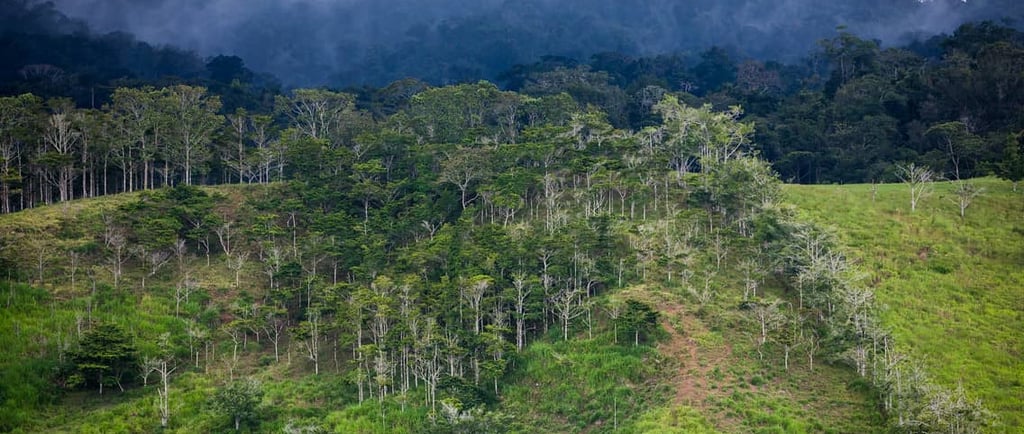
Coto Brus was discovered by Mr. Perafán de Ribera in 1571, during his journey to the southwestern part of our country, after which he traveled along the Caribbean coast. The territory that currently corresponds to the canton was inhabited by indigenous people from the so-called Brunca group, which was under the domain of the Coctos.
In 1601, interim governor Mr. Gonzalo Vázquez de Coronado opened the Mule Path (Camino de Mulas) that led from Cartago to Panama. This route was primarily used for the trade of these animals at the Portobelo Fairs and passed through the area of the current canton of Coto Brus.
At the beginning of the present century, Mr. Maximiliano Peralta and his family lived in the region among the mountains of Cañas Gordas, as did Mr. Pedro Rodríguez Rebolledo. Following the border conflict with the Republic of Panama in 1921, Costaricans became interested in migrating to this area to exploit its natural riches. The Inter-American Highway construction project, with a planned route through the Coto Brus Valley, was a major factor in the migration of many people to the region in 1940. This process increased following the 1944 international boundary agreement between the governments of Panama and Costa Rica, as citizens from both countries moved to the area. Due to a lack of communication routes, these early settlers could initially only engage in subsistence agriculture.
Coffee cultivation began in 1949, becoming the region's most important agricultural product due to favorable prices following World War II. Following a 1951 agreement between the Government of the Republic and the Italian Society of Agricultural Colonization (Sociedad Italiana de Colonización Agrícola), Italian citizens began arriving the following year. The area underwent a great transformation through the efforts of these settlers and the Costaricans who promoted its development.
The first school was established in 1947 during the administration of Mr. Teodoro Picado Michalski, in a hut located where the current Sabalito Rural Assistance Guard Delegation stands. The school currently located in San Vito is named María Auxiliadora. The high school was founded in 1968 under the government of Mr. José Joaquín Trejos Fernández with the name Coto Brus Agricultural Institute (Instituto Agropecuario de Coto Brus); today it is called the Humberto Melloni Regional Vocational Technical Agricultural Institute.
The first church was built in Sabalito and dedicated to the Patriarch Saint Joseph. On April 8, 1953, the first baptism and marriage were celebrated in the San Vito church by Father Humberto Melloni, the priest of the Italian settlers. During the archbishopric of Monsignor Rubén Odio Herrera, the third archbishop of Costa Rica, the parish dedicated to Our Lady of Lourdes was erected. It is currently a suffragan of the Diocese of San Isidro de El General.
On December 10, 1965, during the administration of Mr. Francisco Orlich Bolmarich, Law No. 3598 granted the title of "villa" to the town of San Vito, the head of the newly created canton. Subsequently, on May 4, 1970, Law No. 4574 promulgated the Municipal Code, which conferred the category of "city" upon the town because it was the canton seat.
On September 11, 1966, the first session of the Coto Brus Council was held, composed of council members José Luis Valenzuela Córdoba (President), Cayetano Rojas Argüello (Vice President), Vital Monge Agüero, and Ezequiel Ureña Solís. The municipal secretary was Mr. Albán Gómez Rivera, and the political chief was Mr. Aguedo Villalobos Fonseca.
Regarding the origin of the name of the canton, the statement of purpose for the creation bill indicates it was proposed by Mr. Germán Espinoza Jiménez as a tribute to the chief and his tribe who inhabited the region many years ago. In the document The Aborigines of Costa Rica by Mr. Carlos Gagini, the meanings of both indigenous words appear. It indicates that Couto, Coctú, Cooto, or Cobto was a province southeast of Quepo that was an enemy of the latter and possessed two fortified settlements (palenques). In 1571, on the banks of the Cobto River, Mr. Perafán de Ribera founded the City of Nombre de Jesús.
In 1797, Brusi was a Térraba or northern indigenous subgroup. The name later evolved into Brus, which was assigned to a valley in Boruca. The words Coto Brus were given to the main river, which originates on the slopes of Mount Pando in the Talamanca mountain range. It flows through the valley of the same name before joining the General River to form the Grande de Térraba
Bibliography
Municipalidad de Coto Brus. (2019). Historia del Cantón. https://www.municotobrus.go.cr/articulo/15/historia-del-canton